
Covington County Arrest Records and Court Charges
Arrest records begin with the agency that made the arrest or received the person into custody. In Covington County, that may involve the Sheriff's Department, the Covington County Jail, or a municipal police department in Andalusia, Opp, Florala, or another local jurisdiction. The county jail houses county and municipal inmates, but the official county jail page did not publish a searchable roster or booking profile. For custody status, booking questions, or bond after a warrant arrest, the official fallback is the County Jail at 334-428-2640 or the Sheriff's Department at 334-428-2641.
The court charge record is narrower and more formal. It shows what was filed in court after an arrest, such as a complaint, indictment, information, statute, charge classification, bond entry, arraignment, setting, plea, dismissal, or disposition. Felony matters generally move through District Court preliminary stages and Circuit Court prosecution, while misdemeanor and traffic charges may remain in District Court or municipal court depending on where the offense originated. For the broader criminal case file, including motions, orders, sentencing, restitution, and case-action summaries, use Covington County criminal court records.
The Andalusia Municipal Court page explains the city court's misdemeanor, traffic, warrant, prosecutor, public defender, and bond process.
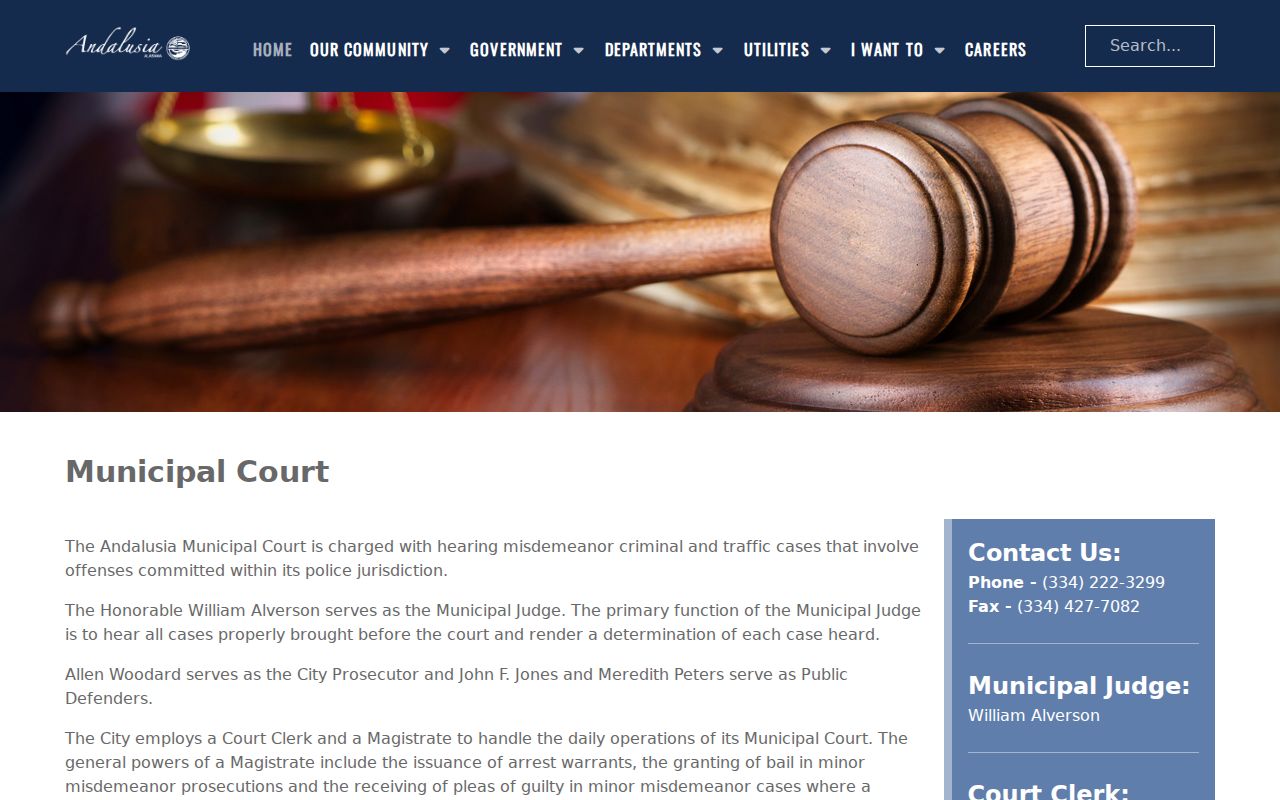
That municipal source is important because city charges may not appear in the same place as state District Court or Circuit Court charges.
How to Find Arrest Records and Charges After Arrest
For District Court and Circuit Court charge records, Alabama's trial-court access systems are the main online path. Alacourt ACCESS, also called Just One Look, lists criminal, civil, domestic relations, child support, small claims, traffic, and other trial-court categories. Its report descriptions include basic case information, court action, case status, setting dates, party information, financial history, case action summary, rulings, document images, and attachments. It requires account/payment access, so certified copies, older records, restricted records, or records missing from the portal should be requested from the Circuit Clerk at 1-K North Court Square in Andalusia, phone 334-428-2520.
- Start with the likely court level: District Court for many misdemeanors, preliminary felony matters, and state traffic citations; Circuit Court for felony prosecution and higher criminal files; municipal court for city ordinance, misdemeanor, and traffic matters.
- Search by defendant name or case number when using Alacourt ACCESS or a municipal payment/search portal. Do not assume one arrest equals one charge, because a single arrest can produce multiple separate counts.
- Open the case detail or charge list and read the charge description, statute, classification, filed date, bond, setting, plea, and disposition fields that are available.
- Compare court charge status with custody information. A person can be released from jail while charges remain pending, or a court charge can be dismissed even though an arrest record still exists until expunged.
The Covington County Sheriff AL mobile app is listed in the Apple App Store and Google Play as an official communication app for reporting crimes, submitting tips, and receiving public-safety news. Store descriptions did not confirm an inmate roster, warrant search, or charge lookup feature, so it should be treated as a communication channel rather than a verified arrest-record database.
Complaint, Information, and Indictment Records
Charges after arrest enter the court record through a charging instrument. A complaint can start a misdemeanor or other criminal proceeding. An information is a written accusation by the district attorney where allowed. An indictment is the grand jury's written accusation, most often associated with felony prosecution. The district attorney prosecutes state criminal cases in Covington County; the jury-information material describes the district attorney as the elected prosecutor for the state and the representative of crime victims in criminal cases.
| Document | Who Initiates It | What It Usually Shows | Where It Matters |
|---|---|---|---|
| Complaint | Officer, complainant, or prosecutor depending on the case | Alleged offense, accused person, probable-cause basis, and requested charge | Municipal, District Court, and early criminal proceedings |
| Information | District attorney | Formal charge filed by prosecutor without grand-jury indictment where legally allowed | State criminal prosecution |
| Indictment | Grand jury | Felony or indictable accusation returned after grand-jury action | Circuit Court felony case file |
The Andalusia online-payment instructions distinguish citation payments from court-ordered payments and require identifying case details before payment can be applied.
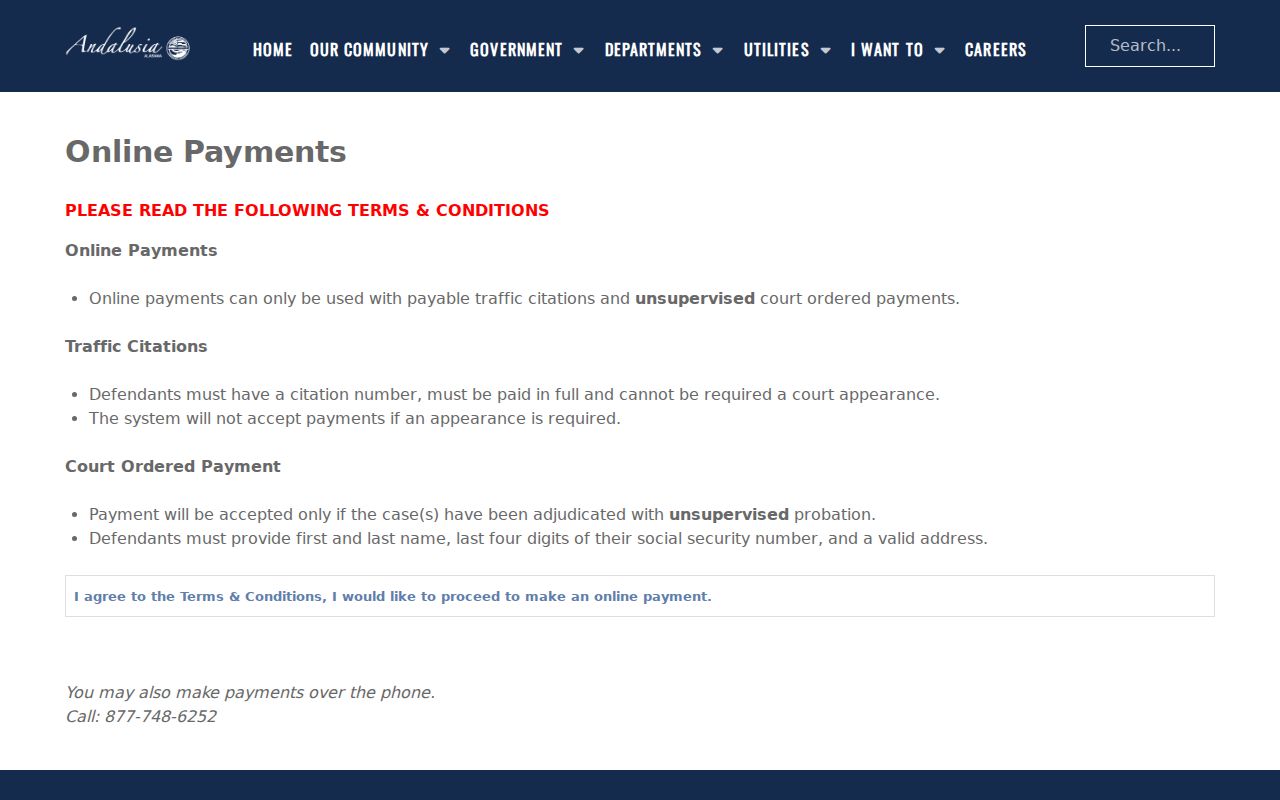
Payment pages are not complete case files, but they help confirm whether a municipal charge has moved into a payable or court-ordered status.
Charge Status and Court-Record Fields
Alacourt report descriptions indicate that a case detail can include basic case information, case status, setting dates, party information, financial history, and a detailed case action summary. A Covington County criminal charge record may show case number, court, case type, filing date, defendant, attorneys, judge, charge, statute, hearing settings, bond, fines, costs, restitution, case-action entries, disposition, and document-image availability. Public-facing pages did not expose a sample local criminal case without login/payment, so local case-number formatting should be verified in the actual court record.
| Status | Meaning in a Charge Record | Practical Reading |
|---|---|---|
| Pending | The accusation is still open and no final disposition has resolved it. | Check the next setting, bond conditions, and whether a plea or hearing is scheduled. |
| Amended or reduced | The prosecutor or court record reflects a change from the original charge. | Compare the original count with the current count before reporting the record. |
| Dismissed | The charge was ended by the court or prosecution. | A dismissal is not the same thing as an automatic expungement. |
| Nolle prosequi | The prosecution declined to proceed on that charge. | Confirm whether other counts in the same case remain active. |
| Convicted or guilty plea | The charge resulted in a plea or finding of guilt. | Look for sentencing, probation, fine, cost, and restitution entries. |
Charge Record vs Conviction Record
A charge is an accusation placed in a court record. A conviction is an outcome after a guilty plea, verdict, or other adjudication. Covington County arrest records can show that a person was arrested, while court records show whether charges were filed, changed, dismissed, or resolved. This distinction matters for background checks, employment screening, licensing, and expungement, because Alabama law treats arrests, pending charges, dismissed charges, and convictions differently.
| Record Type | Stage | What It Proves | Where to Verify |
|---|---|---|---|
| Arrest record | Law-enforcement and custody event | That a person was arrested or booked by an agency | Sheriff, jail, municipal police, or arresting agency |
| Charge record | Formal accusation in court | What offense the prosecutor, complaint, or grand jury placed before the court | Alacourt ACCESS, Circuit Clerk, District Court, Circuit Court, or municipal court |
| Conviction record | Final criminal outcome | That guilt was admitted or found and sentence or penalties were imposed | Case action summary, disposition, sentencing order, or certified court copy |
Andalusia Warrant Affidavits and Municipal Charges
Andalusia publishes a local arrest-warrant process that helps explain how some municipal charges begin. A person seeking a warrant must first obtain an incident or offense report from the Andalusia Police Department. The person then gives a written affidavit at the Municipal Court Office. A magistrate reviews the affidavit, interviews the complainant, and determines whether probable cause exists. If probable cause is found, an arrest warrant is issued, the complaint and warrant are filed with the Andalusia Police Department, and an arresting officer serves the warrant.
After service, the defendant may make the proper bond stated on the warrant, and special release conditions may apply. Andalusia Municipal Court also lists Judge William Alverson, prosecutor Allen Woodard, public defenders John F. Jones and Meredith Peters, court clerk Ann Edwards, and the court office at 102 Opp Avenue. That city-court process is separate from the state District Court and Circuit Court files maintained through the Circuit Clerk.
Bond, Cash Bond, and Charge Resolution
Bond is money or a condition securing a defendant's appearance in court. A surety may be a third party or bonding company responsible for the defendant's appearance. Charge records can show bond amounts, bond forfeiture, release conditions, and later changes after hearings. Andalusia's municipal materials state that a warrant may include the bond amount and that cash bond can be held until court-ordered obligations are satisfied. Covington traffic materials also warn that a failure to appear can cause any posted bond to be forfeited.
Bond entries should be read with the court setting and charge status. A paid bond does not mean the charge disappeared, and a release from custody does not mean the case is closed. If the question is current custody, contact the jail or use official jail channels. If the question is court status, use the court record or clerk channel.
Statewide Criminal History and ALEA Links
Alabama statewide systems are separate from the local court charge file. ALEA online services include official links for background checks, ticket payment, driver license services, the sex offender registry, and related state services. A statewide background check or criminal-history response may summarize reportable information, but the court file is still the better source for the exact local charge, plea, disposition, and case-action details. For FCRA-regulated screening decisions, use a compliant consumer-reporting process rather than casual court browsing.
The ALEA online services page groups Alabama public-safety services, including background-check and ticket-payment paths.
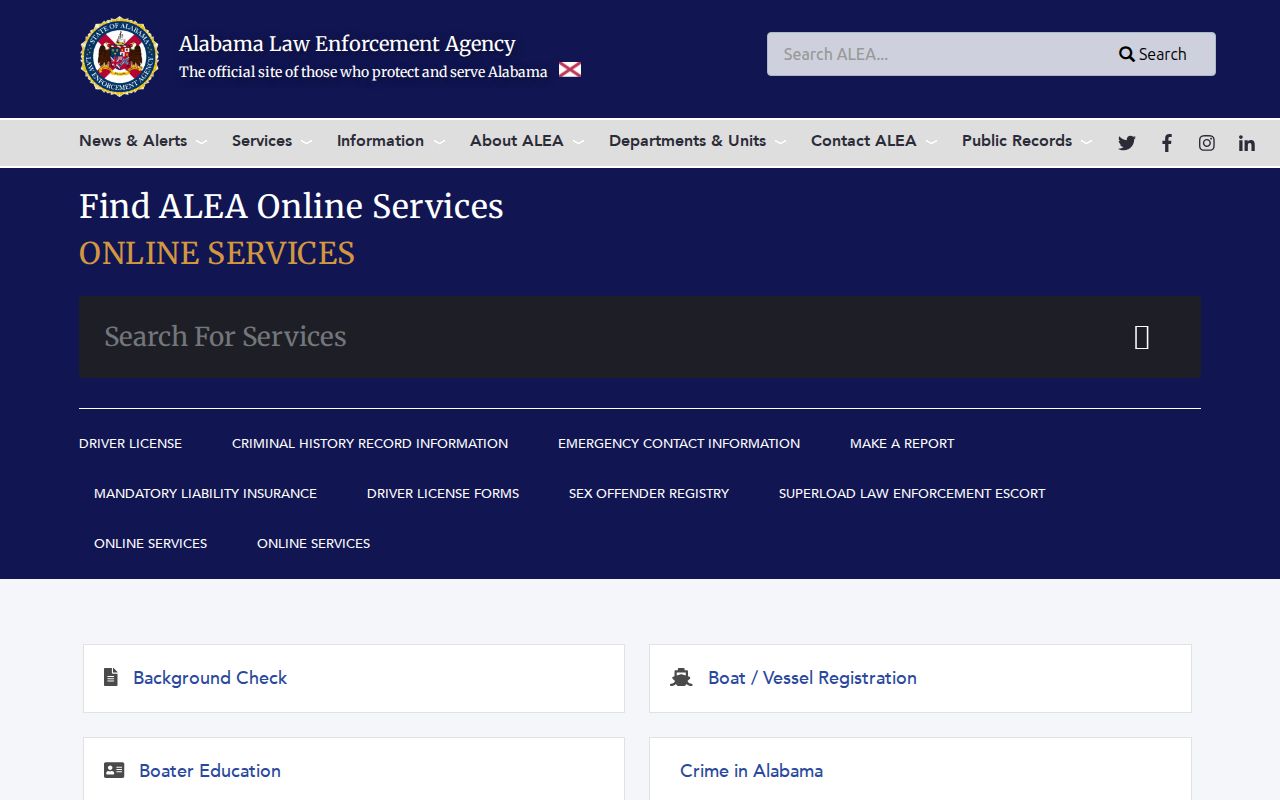
Local court records and statewide public-safety records can overlap, but they are maintained for different purposes.
Expungement Records Needed After a Charge
Alabama expungement is a court process, not an automatic removal from a website. A person normally must identify the arrest, charge, and case; obtain certified supporting records; prepare a sworn petition; file in the appropriate court; and serve required agencies such as the district attorney and relevant law-enforcement agency. Research materials for Alabama official forms reference a certified criminal history from ALEA, a certified record of arrest from the appropriate agency, and a certified record of disposition or case action summary from the appropriate court.
| Record Needed | Likely Source | Why It Matters |
|---|---|---|
| Certified arrest record | Arresting agency, sheriff, jail, or municipal police | Connects the petition to the original arrest event. |
| Case action summary or disposition | Circuit Clerk, District Court, Circuit Court, or municipal court | Shows whether the charge was dismissed, resolved, or otherwise eligible. |
| ALEA criminal history where required | ALEA | Helps identify reportable statewide criminal-history entries. |
Sealed records are closed to ordinary inspection. Expunged records are removed from ordinary public access under Alabama law, subject to statutory exceptions for criminal justice uses. Juvenile records, adoption records, mental-health proceedings, protected personal identifiers, and some sealed materials are not treated as ordinary public records.